Tag: speaking Thai

Noodles /gŭay-dtiăw/ & Pad Thai

ผลการค้นหารูปภาพสำหรับ ผัดไทย

ก๋วยเตี๋ยว /gŭay-dtiăw/ is a loanword from a Chinese dialect. ก๋วย /gŭay/ means flour or fruit/part of fruit. เตี๋ยว /dtiăw/ means lines. When we combine them together, it means lines made from flour. Normally, ก๋วยเตี๋ยว /gŭay-dtiăw/ is made from rice flour.

We believe that ก๋วยเตี๋ยว /gŭay-dtiăw/ came to Thailand in the reign of King Narai the Great; the king of Ayutthaya from 1656 to 1688. After the World War II, rice was in short supply and its price was higher. Field Marshal Plaek Phibunsongkhra, the leader at that time, tried to promote ก๋วยเตี๋ยว /gŭay-dtiăw/ as a lunch meal. Eating and selling noodles at that time was a strategy to drive the economy of the country. It has become so popular in Thailand since then.

Considering from the size of noodles, you can find 3 common kinds of rice noodles: เส้นใหญ่ /sên-yài/: the biggest size (around 1 inch wide), เส้นเล็ก /sên-lég/ the smaller size (a few millimeters wide) and เส้นหมี่ /sên-mèe/ slightly lighter than anglehair pasta.

Due to the nationalistic campaign at that time, the leader did not want ก๋วยเตี๋ยว /gŭay-dtiăw/ to have an image of China. That’s why, Pad Thai was born. In order to differentiate Pad Thai from Chinese noodles, the authentic Pad Thai must not have pork as an ingredient. They believed that pork was the food for Chinese people. The noodles used in Pad Thai must be stickier than the common rice noodles. Adding sprout beans in ก๋วยเตี๋ยว /gŭay-dtiăw/ and Pad Thai is also firstly recommended at that time.

Nowadays Pad Thai becomes one of the icons of Thai food even if it is made of noodles.
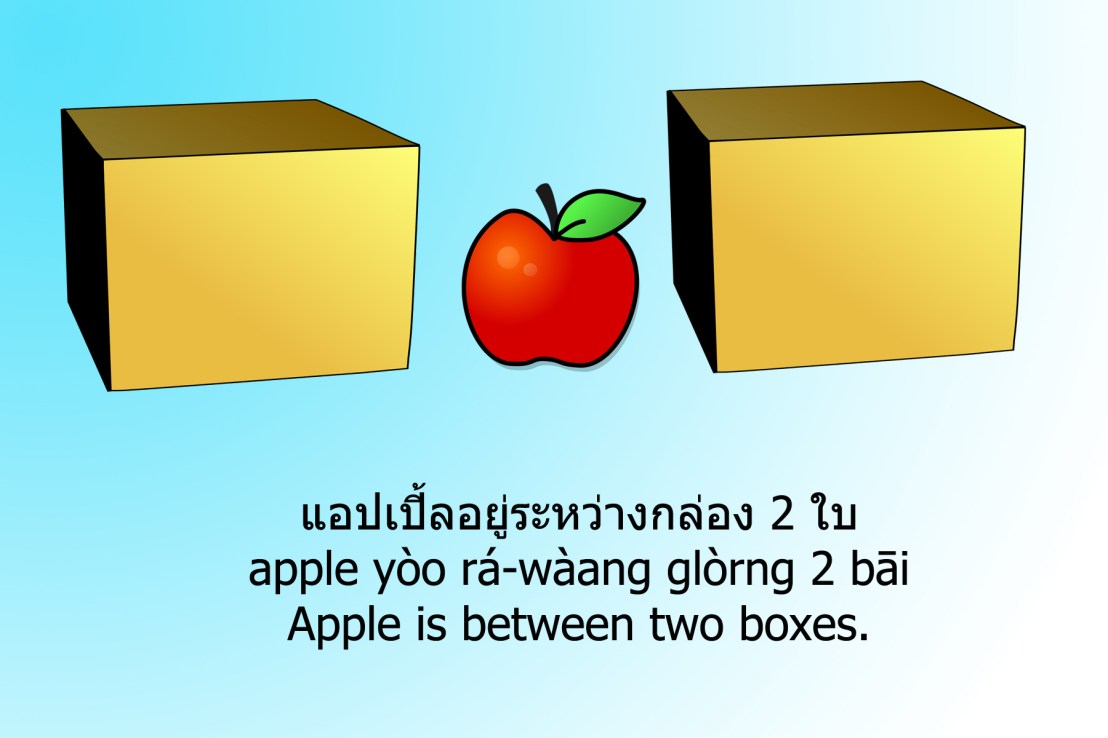
ระหว่าง/rá-wàang/ is not ระวัง /rá-wāng/!

Do you know ระหว่าง/rá-wàang/?

Foreign students often confuse this word with ระวัง /rá-wāng/. Please note that ระวัง /rá-wāng/ mean ‘be careful’ but ระหว่าง/rá-wàang/ is nothing about careful.

If ระหว่าง/rá-wàang/ is a preposition, it means ‘between’.

For example:

  • สุขุมวิทซอย 51 อยู่ระหว่างซอย 49 กับ ซอย 53
  • Sukhumvit Soi 51 yòo rá-wàang Soi 49 gàb  Soi 53
  • Sukhumvit Soi 51 is between Soi 49 and Soi 53.
  • ระหว่างสีแดงกับสีน้ำเงิน เธอชอบสีไหน
  • rá-wàang sĕe-dāeng gàb sĕe-nám-ngērn tēr chôrb sĕe-năi?
  • Between red and blue, which color do you like?


If ระหว่าง/rá-wàang/ is a adverb. It means ‘during’.

For example:

  • ฝนมักจะตกระหว่างเดือนเมษา
  • fŏn mág-jà dtòg rá-wàang dēuan mē-săa
  • It often rains during April.
  • อย่าเล่นมือถือระหว่างประชุม
  • yàa lên mēu-tĕu rá-wàang bprà-chūm
  • Don’t play the cell phone during the meeting.

So, I hope this article helps you to understand this word better! ระหว่าง

Love

heart

sà-wàd-dee kà

Do you know how to say “I love you” in Thai?

Because the Valentine ’s Day is coming, let’s talk about how to express your appreciation and your love to others. Actually, there are many nice terms to say that you are happy to be with someone in Thai language.

ถูกชะตา /tòog-chà-dtaa/ = to click, to hit it off

  • ฉัน/ผม ถูกชะตา กับ คุณ มาก
  • chán/pŏm tòog-chà-dtaa gàb kun mâag
  • I really clicked with you.

We usually use this expression when we meet someone new. ถูกชะตา /tòog-chà-dtaa/ is a feeling when you get along with that person very well even if you are not so close to each other.

ปลื้ม /bplêum/ = to admire, to be in awe of

  • เขา ปลื้ม Kendall มา นาน แล้ว
  • káo bplêum Kendall maa naan láew
  • He has admired Kendall for a long time.

Normally, if you use this word with a celebrity such as a superstar, an author, a sport athlete, etc, it means that you are a big fan. If we use this word with someone who you know in person, it means that you have a crush on him/her.

ชื่นชม /chêun-chom/ = to admire

  • ฉัน/ผม ชื่นชม คุณ มาก
  • chán/pŏm chêun-chom  kun mâag
  • I admire you very much.

This word seems similar with ปลื้ม /bplêum/ but they are not the same. ปลื้ม /bplêum/ is usually used by teenagers or young adults. You might ปลื้ม /bplêum/ someone without any reasons. When we say that we ชื่นชม /chêun-chom/ someone, it refers to his/her attribute or characteristic. What’s more, we hardly use this word to imply anything in romantic way. All in all, this word sounds more sophisticated and formal than ปลื้ม /bplêum/.

รัก /rág/ = to love

  • ฉัน/ผม รัก คุณ
  • chán/pŏm rág kun
  • I love you.

Although I can’t explain much about love because “love is like ghosts”, I don’t think that we can complete this article without this sentence. lol

Happy Valentine’s Day!