Category: Thai history

Do you know where Thai proverb: งู ๆ ปลา ๆ /ngōo-ngōo bplāa-bplāa/ is from?

Do you know where Thai proverb: งู ๆ ปลา ๆ /ngōo-ngōo bplāa-bplāa/ is from?

I believe that you have heard this proverb before. Many of you might even try to say it yourselves, right? When a foreigner would like to explain how good his/her Thai is, it’s pretty common to hear “พูดภาษาไทยงู ๆ ปลา ๆ” /pôod paa-săa Thai ngōo-ngōo bplāa-bplāa/

งู /ngōo/ means snake and ปลา /bplāa/ means fish. It’s quite strange to hear people say “snake snake fish fish” to refer to ‘not well or unskillfully’

Actually, you might notice that there are so many expressions about fish in Thai language, such as กินข้าวกินปลา /gīn kâaw gīn bplāa/, ในน้ำมีปลา ในนามีข้าว /nāi nám mēe bplāa  nāi nāa mēe kâaw/, and ข้าวปลาอาหาร /kâaw bplāa āa-hăan/. It implies that fish and rice have been our main food since King Ram Khamhaeng’s reign (c. 1237/1247 – 1298).

Among many kinds of fresh-water fish, the Asian swamp eels are easily found everywhere in Thailand. Thai people have known and eaten them since the ancient time. The famous dishes are “ต้มปลาไหล” /dtôm bplāa-lăi/ or commonly called “ต้มเปรต” /dtôm bprèd/, spicy eel soup, and ผัดเผ็ดปลาไหล /pàd pèd bplāa-lăi/, spicy stir-fried eel.

The Asian swamp eels, also known as the rice-field eels or the swamp eels are native to Asia. They have elongated, snake-like bodies with tapering tails and blunt snouts. They don’t appear to have any fins. Their scaleless skins are darker green or brown on the top. They can grow to a length of three feet long and weigh up to one pound. They are sometimes mistaken for snakes.

Back to the topic, “งู ๆ ปลา ๆ” /ngōo-ngōo bplāa-bplāa/ is assumed that it is from going fishing in a canal or a rice field. If you are not experienced, you might not see the differences between swamp eels and snakes. That’s why, we call “งู ๆ ปลา ๆ” /ngōo-ngōo bplāa-bplāa/.
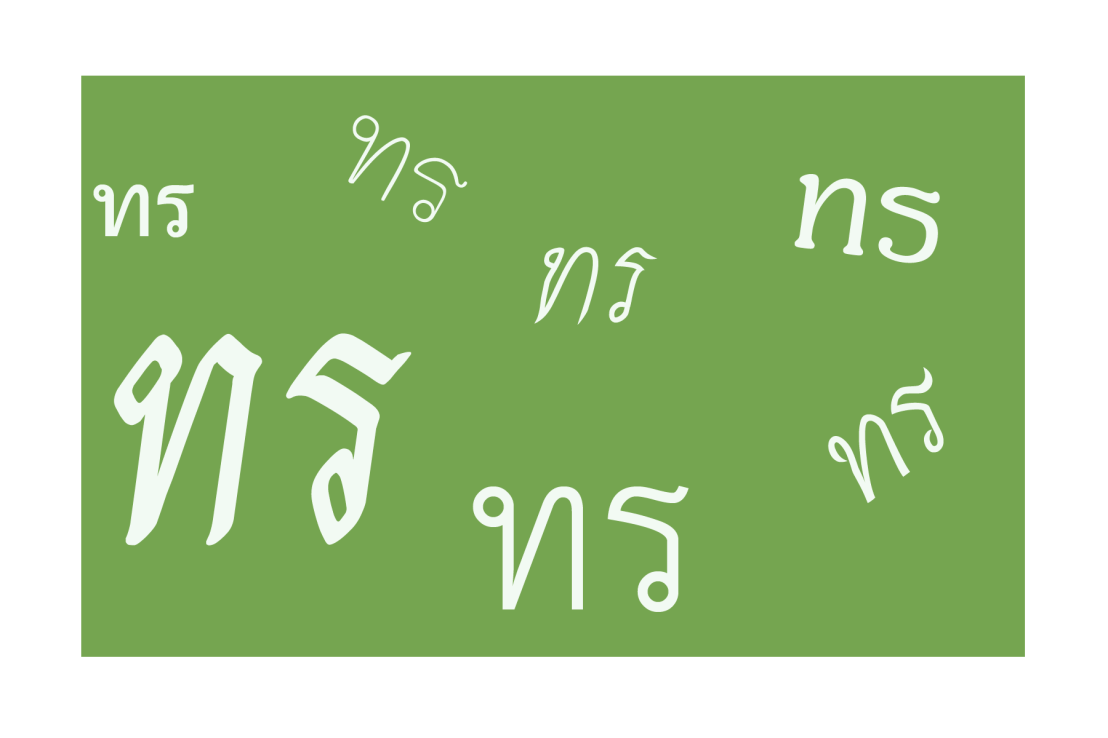
 

Do you know why we pronounce ทร as /s/ or sometimes as /tr/?

ทร

If you can read Thai, you must know that ทร is /s/ such as ทราบ /sàab/ = to know, ทราย /saay/ = sand, etc. but sometimes you might notice that Thai people pronounce them as diphthong such as ทรัมเปต = trumpet or ทรู = true.

Originally, we don’t have diphthong ทร /tr/ sound in Thai phonology. All words with ทร were sounded out as /s/. At the beginning of Rattanakosin Period (1782 – present), we started to see the change.

อินทรา /in-tra/ = Indra, an Indian god; นิทรา /ní-tra/ = sleep and จันทรา /jan-tra/ = moon were exceptions, changed from /s/ to /tr/ sound in Rattanakosin Period.

It’s useful to learn that words with ทร usually are loanwords. If they are from Khmer or Pali-Sanskrit, we usually pronounce as one single sound /s/ except those 3 words above. If they are from English language such as trust, trumpet, tractor, etc., it’s a common practice to pronounce as /tr/.

Any other words with ทร that you know? 🙂


Noodles /gŭay-dtiăw/ & Pad Thai

ผลการค้นหารูปภาพสำหรับ ผัดไทย

ก๋วยเตี๋ยว /gŭay-dtiăw/ is a loanword from a Chinese dialect. ก๋วย /gŭay/ means flour or fruit/part of fruit. เตี๋ยว /dtiăw/ means lines. When we combine them together, it means lines made from flour. Normally, ก๋วยเตี๋ยว /gŭay-dtiăw/ is made from rice flour.

We believe that ก๋วยเตี๋ยว /gŭay-dtiăw/ came to Thailand in the reign of King Narai the Great; the king of Ayutthaya from 1656 to 1688. After the World War II, rice was in short supply and its price was higher. Field Marshal Plaek Phibunsongkhra, the leader at that time, tried to promote ก๋วยเตี๋ยว /gŭay-dtiăw/ as a lunch meal. Eating and selling noodles at that time was a strategy to drive the economy of the country. It has become so popular in Thailand since then.

Considering from the size of noodles, you can find 3 common kinds of rice noodles: เส้นใหญ่ /sên-yài/: the biggest size (around 1 inch wide), เส้นเล็ก /sên-lég/ the smaller size (a few millimeters wide) and เส้นหมี่ /sên-mèe/ slightly lighter than anglehair pasta.

Due to the nationalistic campaign at that time, the leader did not want ก๋วยเตี๋ยว /gŭay-dtiăw/ to have an image of China. That’s why, Pad Thai was born. In order to differentiate Pad Thai from Chinese noodles, the authentic Pad Thai must not have pork as an ingredient. They believed that pork was the food for Chinese people. The noodles used in Pad Thai must be stickier than the common rice noodles. Adding sprout beans in ก๋วยเตี๋ยว /gŭay-dtiăw/ and Pad Thai is also firstly recommended at that time.

Nowadays Pad Thai becomes one of the icons of Thai food even if it is made of noodles.