Category: Thai culture

Do you know what สวัสดี /sà-wàd-dēe/ mean?

Do you know what สวัสดี /sà-wàd-dēe/ mean?

sà-wàd-dēe kà

This is the first word that we will use to greet each other. It might also be the first Thai word that you know but in reality it is not Thai. Actually, this is a Sanskrit word, created by Phraya Upakitsinlapasan (1879 – 1941) for greeting between students and professors in the faculty of Liberal Arts, Chulalongkorn University when he worked as a professor there. It became the official greeting word in 1943 by Field Marshal Plaek Phibunsongkhram (1897 – 1964), the Prime Minister of Thailand at that time.

สวัสดี /sà-wàd-dēe/ is a compound word from a prefix สุ /sù/ (meaning good, beautiful, easy) and a word อสฺติ /àd-sà-dtì/ (meaning there is, there are, have). When these two words merged together following the grammar rules, สุ /sù/ became สว /sà-wà/. Plusing อสฺติ /àd-sà-dtì/, สวสฺติ /sà-wàd-dì/ means ‘Wish (you) goodness and virtue!’ It reminds me of the phrase “May the force be with you!” Does it ring a bell? LOL

This word was originally a short vowel sound for all syllables but Phraya Upakitsinlapasan changed the last syllable into a long sound to make it sound better.

After that, there were some more greeting words created such as อรุณสวัสดิ์ /à-run-sà-wàd/ for ‘good morning’, ทิวาสวัสดิ์ /tí-waa-sà-wàd/ for ‘good afternoon’, สายัณห์สวัสดิ์ /săa-yan-sà-wàd/ for ‘good evening’ and ราตรีสวัสดิ์ /raa-dtee-sà-wàd/ for ‘good night’. However, these words are not as popular as สวัสดี /sà-wàd-dēe/ which we can use any time during the day. Only อรุณสวัสดิ์ /à-run-sà-wàd/ for ‘good morning’ and ราตรีสวัสดิ์ /raa-dtee-sà-wàd/ for ‘good night’ are still used until now.

sà-wàd-dēe kà!
May the virtue be with you!

Do you know why we say โมง /moeng/ ทุ่ม /tûm/ and ตี /dtee/ for telling time?

Do you know why we say โมง /moeng/ ทุ่ม /tûm/ and ตี /dtee/ for telling time?

There are 2 different systems to tell time in Thai. The easiest one is the official way. We will use 0 to 24 following by a word นาฬิกา /naa-lí-gaa/. นาฬิกา /naa-lí-gaa/ means clock, watch or o’clock. It’s very simple but nobody uses it in spoken language. I mean, you can talk with people by using this system but please don’t expect anyone else who are Thai to refer to this system when talking about time.

So, how do Thai people tell time in general?

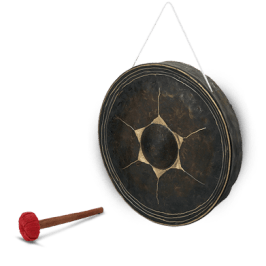
ฆ้องโหม่ง


In the ancient time when people didn’t have watches, clocks everywhere like now. A City Hall or a temple was responsible for telling time. During the daytime, they would hit a kong. People thought that its sounds was like ‘moeng’ (โหม่ง) so, they said ‘moeng’


At night, they changed the instruments. From 7 P.M. until midnight, they hit a drum instead. People heard its sound like ‘dtum’ (ตุ้ม) so they said ‘tum’. After midnight, it was not clear what exactly was the instrument for telling time. In the peaceful time, it might be possible that no one was awake the whole night to tell time. Anyway, they assumed that some kind of metal will be used to hit from 1 A.M. until 5 A.M. That’s why we use the word ตี /dtee/, meaning hit, slap, etc.

Official Time

(24-hour based system)

6-hour based system

(Originally)

6-hour based system

(Nowadays)

1 naa-lí-gaa dtee 1 dtee 1
2 naa-lí-gaa dtee 2 dtee 2
3 naa-lí-gaa dtee 3, 3 yaam dtee 3
4 naa-lí-gaa dtee 4 dtee 4
5 naa-lí-gaa dtee 5 dtee 5
6 naa-lí-gaa dtee 6, yâm-rûng 6 moeng-cháo
7 naa-lí-gaa 1 moeng-cháo 7 moeng-cháo
8 naa-lí-gaa 2 moeng-cháo 8 moeng-cháo
9 naa-lí-gaa 3 moeng-cháo 9 moeng-cháo
10 naa-lí-gaa 4 moeng-cháo 10 moeng
11 naa-lí-gaa 5 moeng-cháo, pen 11 moeng
12 naa-lí-gaa tîang, tîang-wan, yâm-tîang tîang, tîang-wan
13 naa-lí-gaa bàay 1 moeng bàay moeng
14 naa-lí-gaa bàay 2 moeng bàay 2, 2 moeng
15 naa-lí-gaa bàay 3 moeng bàay 3, 3 moeng
16 naa-lí-gaa bàay 4 moeng bàay 4 (moeng), 4 moeng-yen
17 naa-lí-gaa bàay 5 moeng 5 moeng-yen
18 naa-lí-gaa 6 moeng-yen, yâm-kâm 6 moeng-yen
19 naa-lí-gaa 1 dtûm 1 dtûm
20 naa-lí-gaa 2 dtûm 2 dtûm
21 naa-lí-gaa 3 dtûm, yaam 1 3 dtûm
22 naa-lí-gaa 4 dtûm 4 dtûm
23 naa-lí-gaa 5 dtûm 5 dtûm
24 naa-lí-gaa, 0 naa-lí-gaa tîang-keun, 6 dtûm, 2 yaam tîang-keun
Do you know ขนมจีน /kà-nŏm-jeen/ didn’t come from China?

Do you know ขนมจีน /kà-nŏm-jeen/ didn’t come from China?

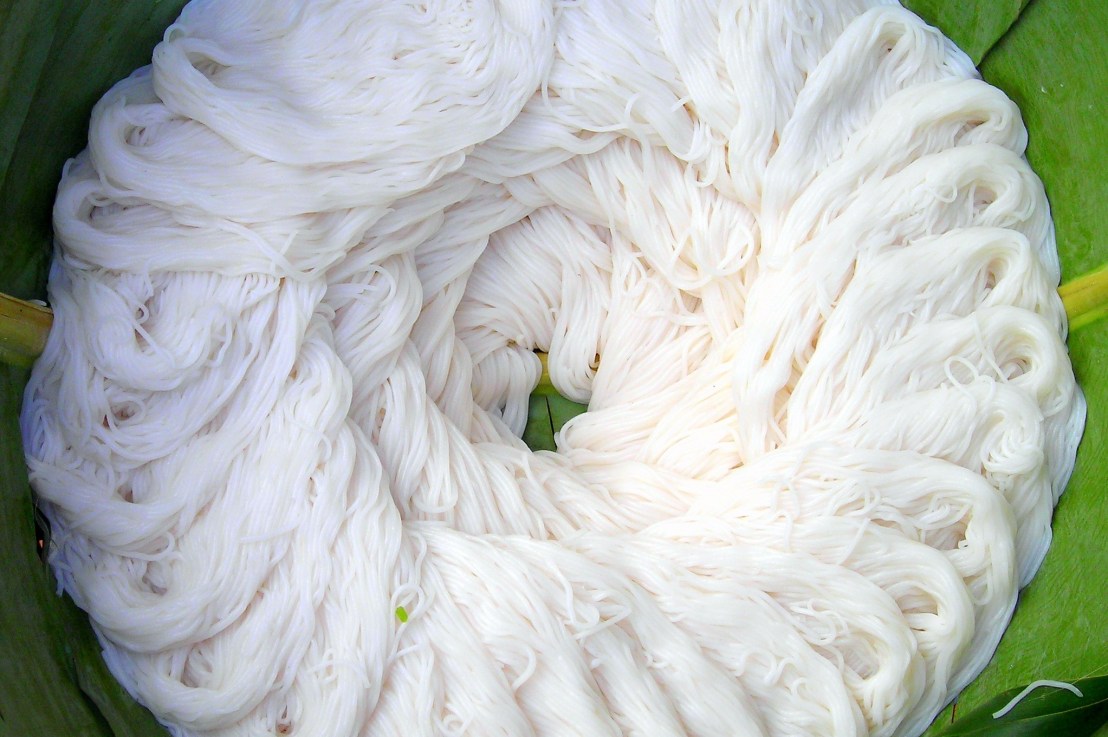
ขนมจีน /kà-nŏm-jeen/ is one kind of noodles, made from rice flour, in Thailand. In the northern part, it is called ‘ขนมเส้น’ /kà-nŏm-sên/. Esan people call it ‘ข้าวปุ้น’ /kâaw-bpûn/ and it is known as ‘โหน้มจีน’ /nóm-jeen/ in the southern part.

ขนมจีน /kà-nŏm-jee/ has a ridiculous name because it’s totally not ขนม /kà-nŏm/ in Thai people’s eyes and it’s not from China if you must know.

What is ขนม /kà-nŏm/?

If you look it up, you will see meanings such as sweets, dessert, candy, etc. Actually, the definition of ขนม /kà-nŏm/ is a lot wider than that. We count snacks, such as potato chips, French fried, biscuits, dried fruits, nuts & seeds, etc. as ขนม /kà-nŏm/. With this range, ขนม /kà-nŏm/ can be sweet, sour, salty, even spicy. Thai people especially girls love having it any time.

When a student asks me what ขนม /kà-nŏm/ is, I always answer simply “It’s something that you enjoy eating. Normally it’s not healthy. It can’t really make your stomach full but it tastes soooooo good!” LOL

If ขนมจีน /kà-nŏm-jee/ didn’t come from China, where was it from?

It was originally Mon food from Burma. The word ‘ขนมจีน’ /kà-nŏm-jeen/ was from ‘ขฺนํจินฺ’, คะนอมจีน /ká-nom-jeen/,  ‘คะนอม’/ká-nom/ means noodles and  ‘จีน’/jeen/ means be cooked.

Thai people love having ขนมจีน /kà-nŏm-jee/ with various soup or curry. They like to eat fresh vegetables together with it. Some people like me also love having it with ส้มตำ /sôm-dtam/, aka Thai green papaya salad.

noodle-2402592_960_720

Surprisingly, ขนมจีน /kà-nŏm-jee/ provides less calories than other rice noodles and glass noodles. So, let’s eat ขนมจีน /kà-nŏm-jee/ if you are on a diat. LOL

Do you know why we have ฃ and ฅ?

Do you know why we have ฃ and ฅ?

If you’d like to learn how to read and write Thai, normally you will start with alphabets, right?

In Thai language, there are 44 consonant letters. It’s funny because there are 2 characters which we don’t use anymore, but we still count them as part of our alphabets. Any ideas?

Right, I’m talking about ฃ and ฅ.

So, when did ฃ and ฅ be created and for what reason?

For the first question, we have got evidence from the King Ramkhamhaeng Insription, aka Ram Khamhaeng Stele (composed in 1292), that we did have these two letters starting from the beginning.

Referring to the inscription, you could find some examples of ฃ and ฅ, such as ฃึ้น, ฃุน, ฃาม, ฅำ, ฅู้ม, ฅวาม etc. and these two still be used until Rattanakosin Era (1782 – present).

ฃ and ฅ were left from the writing system firstly when the first Thai typewriter was developed by Edwin Hunter McFarland in 1892. Why? No space for all letters!

Although these two were still be used popularly in King Vajiravudh’s reign (1910 – 1925), their usage became less and less after that until there were only one word of each left: เฃตร and ฅอ.

When Field Marshal Plaek Phibunsongkhram, locally known as Chomphon Por; contemporarily known as Phibun in the West, served as the Prime Minister of Thailand (1948 – 1957), many consonant letters and vowels were eliminated from the writing system. Of course, ฃ and ฅ were included.

The others consonants have resumed their usage after Chomphon Por’s period of time but not these two consonants.

So, we are back to the second question. If they were not that important why did we have them?

From many of Thai specialists’ assumptions, they do believe that at the beginning, ฃ and ฅ must represent different sounds from ข and ค respectively but nobody really knows which sounds exactly.

Do you know all the Thai consonants which represent /k/ sound?