Category: Thai language

Do you know what พอ /por/ means?

Do you know what พอ /por/ means?

First of all, please don’t mix between พอ /por/, middle tone and พ่อ /pôr/, falling tone. When we talk about dad, we say ‘พ่อ’ /pôr/. It’s falling tone!

  1. พอ /por/ = enough
  • เขามีเงินไม่พอซื้อบ้าน /káo mee ngern mâi por séu bâan/
  • He doesn’t have enough money to buy a house.
  • “เอาข้าวอีกไหมคะ” “พอแล้วครับ” /ao kâaw èeg mái ká/ /por láew kráb/
  • “Some more rice?” “(I’m) enough.”
  1. พอ /por/ = As soon as; when
  • พอเขามาถึง ฝนก็ตก /por káo maa teŭng fŏn gôr dtòg/
  • As soon as she/he arrived, it rained.
  • พอเขาเรียนจบ เขาก็ไปทำงานที่ต่างประเทศ / por káo rian jòb káo gôr bpai tam-ngaan têe dtàang-bprà-têd/
  • When she/he graduated, she/he went to work abroad.

There are some other compound words and expressions with ‘พอ’ /por/, such as

  1. พอใจ /por-jai/ = satisfy
  • เขาพอใจกับบริการของเรา /káo por-jai gàb bor-ri-gaan kŏrng rao/
  • She/he is satisfied with our service.
  1. พอดี /por-dee/ = fit, just right
  • รองเท้าคู่นี้ใส่พอดี /rorng-táo kôo née sâi por-dee/
  • This pair of shoes is fit.
  1. พอใช้(ได้) /por-chái(dâi)/ = fairly (well)
  • พนักงานคนใหม่ทำงานพอใช้ได้ /pa-nág-ngaan kon mâi tam-ngaan por-chái-dâi/
  • The new employee work fairly well.
  1. พอ(ๆ)กัน /por(por)-gan/ = equal
  • ฉันกับน้องสาวสูงพอ ๆ กัน /chán gàb nŏrng-săaw sŏong por-por-gan/
  • My sister and I have equal height.
  1. พอกันที /por-gan-tee/ = I’ve had enough!, I’ve had it (up to here)!
  • เขาไม่เคยมีเวลาให้ฉันเลย  พอกันที /káo mâi kery mee we-laa hâi chán lery   por-gan-tee/
  • He never has time for me. I’ve had it!

I hope that you enjoy reading my articles and learning Thai. Don’t have had it up to here with Thai lessons! LOL

Do you know why we have ฃ and ฅ?

Do you know why we have ฃ and ฅ?

If you’d like to learn how to read and write Thai, normally you will start with alphabets, right?

In Thai language, there are 44 consonant letters. It’s funny because there are 2 characters which we don’t use anymore, but we still count them as part of our alphabets. Any ideas?

Right, I’m talking about ฃ and ฅ.

So, when did ฃ and ฅ be created and for what reason?

For the first question, we have got evidence from the King Ramkhamhaeng Insription, aka Ram Khamhaeng Stele (composed in 1292), that we did have these two letters starting from the beginning.

Referring to the inscription, you could find some examples of ฃ and ฅ, such as ฃึ้น, ฃุน, ฃาม, ฅำ, ฅู้ม, ฅวาม etc. and these two still be used until Rattanakosin Era (1782 – present).

ฃ and ฅ were left from the writing system firstly when the first Thai typewriter was developed by Edwin Hunter McFarland in 1892. Why? No space for all letters!

Although these two were still be used popularly in King Vajiravudh’s reign (1910 – 1925), their usage became less and less after that until there were only one word of each left: เฃตร and ฅอ.

When Field Marshal Plaek Phibunsongkhram, locally known as Chomphon Por; contemporarily known as Phibun in the West, served as the Prime Minister of Thailand (1948 – 1957), many consonant letters and vowels were eliminated from the writing system. Of course, ฃ and ฅ were included.

The others consonants have resumed their usage after Chomphon Por’s period of time but not these two consonants.

So, we are back to the second question. If they were not that important why did we have them?

From many of Thai specialists’ assumptions, they do believe that at the beginning, ฃ and ฅ must represent different sounds from ข and ค respectively but nobody really knows which sounds exactly.

Do you know all the Thai consonants which represent /k/ sound?

Do you know any Thai expressions about noodles?

Do you know any Thai expressions about noodles?

Recently we talked about the origin of ก๋วยเตี๋ยว /gŭay-dtiăw/. If you remember, rice noodles vary in size mainly. The biggest ones are called เส้นใหญ่ /sên-yài/.

  1. ขอเส้นใหญ่ น้ำใส หมู /kŏr sên-yài nám-săi mŏo/
  2. ผู้ชายคนนั้นเส้นใหญ่มาก /pôo-chaay kon nán sên-yài mâag/

Can you guess the meaning of both sentences? Number 1, it means ‘big noodles, clear soup, (with) pork’. Yes, it’s simply an order when you go to a noodle restaurant.

What’s about number 2? When we say that someone is a big noodle, we do not mean that someone becomes real noodles. No, it doesn’t make sense. So, what does it mean?

In Thai language, เส้น /sên/ can also refer to connections. That’s why, someone with very good connections is called เส้นใหญ่ /sên-yài/. Normally, this word is pretty negative. We regularly use it to explain how someone gets something such as a position or any kinds of advantages in an unusual way.

Do you like มาม่า /maa-mâa/?

mama

If you have been in Thailand long enough, it’s impossible not to know it. มาม่า /maa-mâa/ is everywhere in Thailand; in 7-11, big or small grocery shops, supermarkets, hypermarkets, even at home.

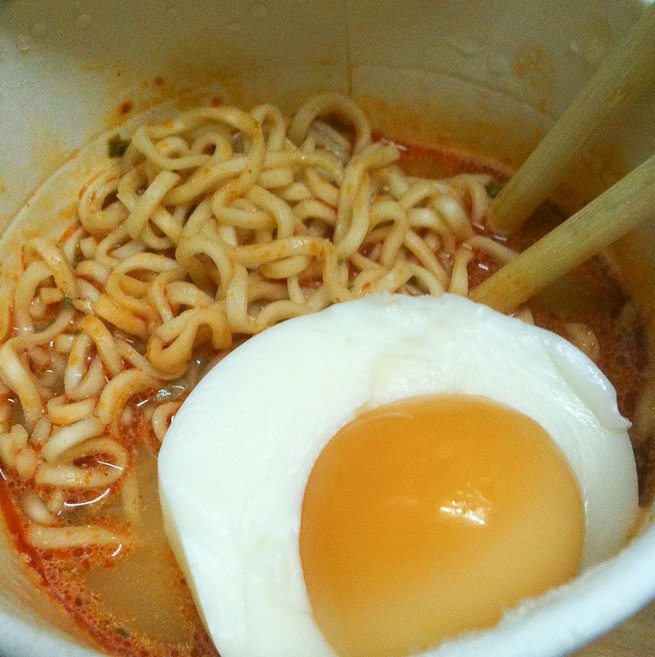
Yes, we are talking about instant noodles!!! Instant noodles are made from wheat flour. They are steamed before deep fried. Different from Instant noodles in other countries, here they are very crispy. You can even eat them dry without boiling in water.

Actually, มาม่า /maa-mâa/ is one brand. Because of its popularity, everyone calls all instant noodles casually ‘มาม่า’ /maa-mâa/.

Thais pick up a word ดราม่า /dra-mâa/ from ‘dramatic’ in English. When someone is over-dramatic, we will call him/her ‘ดราม่า’ /dra-mâa/

Nowadays some people overreact in online public spaces such as forums, pages, etc. So, it’s not that hard to see them argue with each other if they disagree.

Since ดราม่า /dra-mâa/ and มาม่า /maa-mâa/ sound similar, Thai people use มาม่า /maa-mâa/ to describe a feeling that quarrel will begin soon because of the drama.

You might notice an expression ‘ต้มมาม่ารอ’ /dtôm maa-mâa ror/ when they are waiting to see people dispute against each other due to their over-dramatic comments.

Today we talk about two different kinds of noodles and two expressions in Thai language. I hope that you enjoy having noodles like me and will not กินมาม่า /gin maa-mâa/ with anyone soon. LOL

Bon appetit!


Do you know where Thai proverb: งู ๆ ปลา ๆ /ngōo-ngōo bplāa-bplāa/ is from?

Do you know where Thai proverb: งู ๆ ปลา ๆ /ngōo-ngōo bplāa-bplāa/ is from?

I believe that you have heard this proverb before. Many of you might even try to say it yourselves, right? When a foreigner would like to explain how good his/her Thai is, it’s pretty common to hear “พูดภาษาไทยงู ๆ ปลา ๆ” /pôod paa-săa Thai ngōo-ngōo bplāa-bplāa/

งู /ngōo/ means snake and ปลา /bplāa/ means fish. It’s quite strange to hear people say “snake snake fish fish” to refer to ‘not well or unskillfully’

Actually, you might notice that there are so many expressions about fish in Thai language, such as กินข้าวกินปลา /gīn kâaw gīn bplāa/, ในน้ำมีปลา ในนามีข้าว /nāi nám mēe bplāa  nāi nāa mēe kâaw/, and ข้าวปลาอาหาร /kâaw bplāa āa-hăan/. It implies that fish and rice have been our main food since King Ram Khamhaeng’s reign (c. 1237/1247 – 1298).

Among many kinds of fresh-water fish, the Asian swamp eels are easily found everywhere in Thailand. Thai people have known and eaten them since the ancient time. The famous dishes are “ต้มปลาไหล” /dtôm bplāa-lăi/ or commonly called “ต้มเปรต” /dtôm bprèd/, spicy eel soup, and ผัดเผ็ดปลาไหล /pàd pèd bplāa-lăi/, spicy stir-fried eel.

The Asian swamp eels, also known as the rice-field eels or the swamp eels are native to Asia. They have elongated, snake-like bodies with tapering tails and blunt snouts. They don’t appear to have any fins. Their scaleless skins are darker green or brown on the top. They can grow to a length of three feet long and weigh up to one pound. They are sometimes mistaken for snakes.

Back to the topic, “งู ๆ ปลา ๆ” /ngōo-ngōo bplāa-bplāa/ is assumed that it is from going fishing in a canal or a rice field. If you are not experienced, you might not see the differences between swamp eels and snakes. That’s why, we call “งู ๆ ปลา ๆ” /ngōo-ngōo bplāa-bplāa/.