Category: Thai language

Thai proverb: หนีเสือปะจระเข้ /něe seŭa bpà jor-rá-kê/

Thai proverb: หนีเสือปะจระเข้ /něe seŭa bpà jor-rá-kê/

This is an ancient Thai proverb. Can you guess what it means? If not, I can give you some clues. Let’s see the meaning of each word in this proverb.

หนี /něe/ (v.) = escape; avoid; flee

  • หนู วิ่ง หนี แมว /nŏo wîng nĕe maew/
  • A rat ran away from a cat.

เสือ /seŭa/ (n.) = tiger

Please note that เสือ /seŭa/ is a rising tone but เสื้อ /seûa/, meaning upper-body clothes such as shirt, blouse, etc. is a fallowing tone.

  • เธอ ใส่ เสื้อ ลายเสือ /ter sài seûa laay seŭa/
  • She is wearing a tiger stripe blouse.

ปะ /bpà/ (v.) = meet; run into; come across (very rarely used nowadays)

จระเข้ /jor-rá-kê/ (n.) = crocodile

In a spoken language, people might say “ตะเข้” /dtà-kê/ instead of “จระเข้” /jor-rá-kê/. Sometimes they might even cut everything and keep only the last syllable “เข้” /kê/

  • จระเข้ ชอบ กิน ไก่ /jor-rá-kê chôr gin gài/
  • Crocodiles like eating chicken.

I believe that you have an idea what this phrase imply by now. Yes, this proverb describes someone who moves from a bad or difficult situation (a tiger) to one that is worse (a crocodile). It’s similar to “(jump) out of the frying pan into the fire” in English.

I don’t know why but one of my students really likes this saying even he couldn’t remember other new slangs. Although it’s nice to know some Thai expressions, I hope that you will not have to use this one soon. LOL

โชคดีค่ะ J

Good Luck!

Do you know how many meanings of ใจ /jai/ in Thai?

Do you know how many meanings of ใจ /jai/ in Thai?

If you are studying Thai, you might notice that there are so many compound words consisted of ใจ /jai/.

When you say only ใจ /jai/, it means a heart.

For example:

เขาใจเต้นแรงเมื่อพูดต่อหน้าคนมากๆ /káo jai dtên raeng meûa pôod dtòr nâa kon mâag-mâag/ His heart is pounding when speaking in public.

We also use ใจ /jai/ to explain characteristics of people such as

– ใจดี /jai-dee/ = kind, nice

– ใจร้าย /jai-ráay/ = mean, unkind

– ใจดำ /jai-dam/ = pitiless, heartless

– ใจเย็น /jai-yen/ = temperate, calm

– ใจร้อน /jai-rórn/ = hot-tempered

– ใจแข็ง /jai-kăeng/ = adamant

– ใจอ่อน /jai-òrn/ = easy to change one’s mind (≠ adamant)

– ใจกว้าง /jai-gwâang/ = generous

– ใจแคบ /jai-kâeb/ = narrow minded

For example:

เธอเป็นคนใจเย็น /ter bpen kon jai-yen/ She is a calm person.

แม่เลี้ยงของซินเดอเรล่าใจร้ายมาก  /mâe-liáng kŏrng Cinderella jai-ráay mâag/ Cinderella’s step mother was very mean.

What’s more, we use ใจ /jai/ to narrate a negative feeling when someone faces a bad situation.

– ใจหาย /jai-hăay/ = shocked, stunned with fear

– ใจไม่ดี /jai-mâi-dee/ = alarmed, anxious

– ใจเสีย /jai-săi/ = frightened, disheartened

For example:

เขาใจเสียเมื่อรู้ว่าแม่ป่วย /káo jai-săi meâu róo wâa mâe bpùay/ He was frightened when he knew that his mother was sick.

เธอใจหายเพราะหากระเป๋าเงินไม่เจอ /ter jai-hăay prór hăa grà-bpăo ngern mâi jer/ She is shocked because she can’t find her wallet.

If something/someone causes or makes you feel in one way or another, you might hear words with ใจ /jai/ again.

– ดีใจ /dee-jai/ = glad

– เสียใจ /săi-jai/ = sad

– แน่ใจ /nâe-jai/ = sure

– มั่นใจ /mân-jai/ = certain, confident

– สบายใจ /sà-baay-jai/ = content, relexed

– หนักใจ /nàg-jai/ = worried

– พอใจ /por-jai/ = satisfied

– กลุ้มใจ /glum-jai/ = depressed

– โล่งใจ /lôeng-jai/ = relieved

– แปลกใจ /bpâeg-jai/ = surprised

– ตกใจ /dtôg-jai/ = scared, shocked

For example:

เธอแปลกใจที่เจอเขาที่กรุงเทพ /ter bpâeg-jai têe jer káo têe krùng-têb/ She was surprised to see him in Bangkok.

เขาแน่ใจว่าวันนี้ฝนจะตก /káo nâe-jai wâa wan-née fŏn jà dtòg/ He is sure that it’ll rain today.

With all these examples, you might think that “ใจ” /jai/ words are always adjectives. Actually, some verbs are composed of ใจ /jai/ too.

– เข้าใจ /kâo-jai/ = understand

– หายใจ /hăay-jai/ = breath

– ตั้งใจ /dtâng-jai/ = try hard; plan

– ตัดสินใจ /dtàd-sĭn-jai/ = decide, make up one’s mind

– เปลี่ยนใจ /bpliàn-jai/ = change one’s mind

– ไว้ใจ /wái-jai/ = trust

For example:

ฉันไว้ใจคุณ /chán wái-jai kun/ I trust you.

เธอไม่เข้าใจ /ter mâi kâo-jai/ She doesn’t understand.

These are some examples of words with ใจ /jai/. Do you know more?

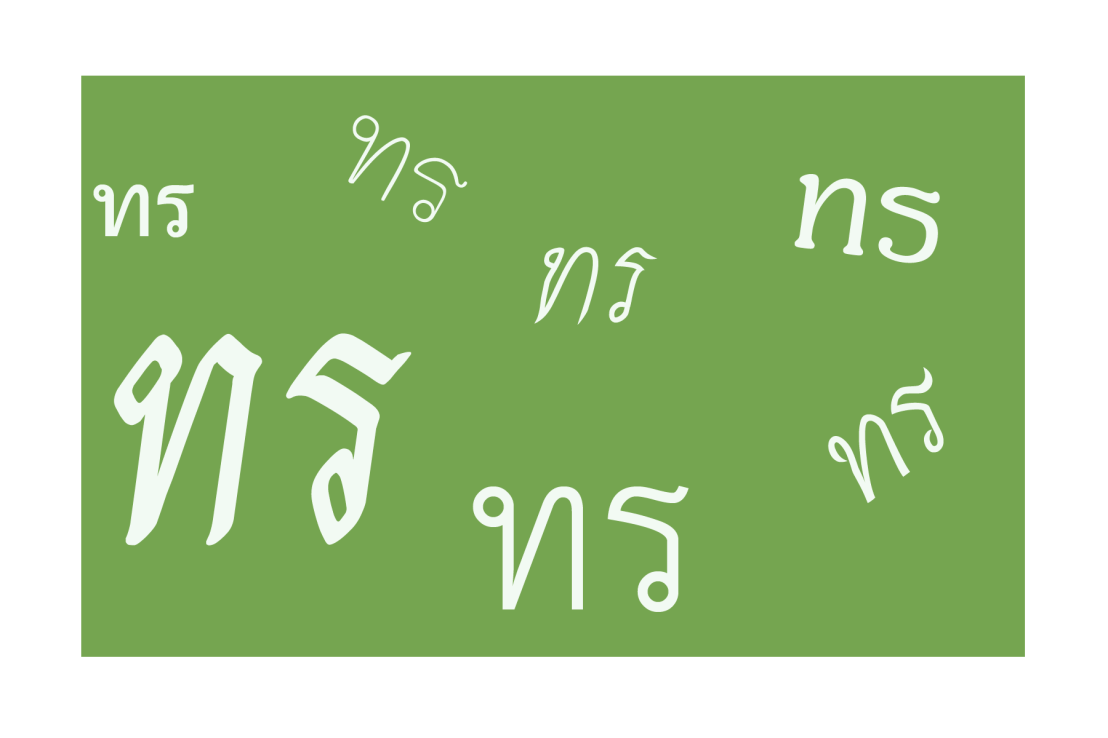
Do you know why we pronounce ทร as /s/ or sometimes as /tr/?

ทร

If you can read Thai, you must know that ทร is /s/ such as ทราบ /sàab/ = to know, ทราย /saay/ = sand, etc. but sometimes you might notice that Thai people pronounce them as diphthong such as ทรัมเปต = trumpet or ทรู = true.

Originally, we don’t have diphthong ทร /tr/ sound in Thai phonology. All words with ทร were sounded out as /s/. At the beginning of Rattanakosin Period (1782 – present), we started to see the change.

อินทรา /in-tra/ = Indra, an Indian god; นิทรา /ní-tra/ = sleep and จันทรา /jan-tra/ = moon were exceptions, changed from /s/ to /tr/ sound in Rattanakosin Period.

It’s useful to learn that words with ทร usually are loanwords. If they are from Khmer or Pali-Sanskrit, we usually pronounce as one single sound /s/ except those 3 words above. If they are from English language such as trust, trumpet, tractor, etc., it’s a common practice to pronounce as /tr/.

Any other words with ทร that you know? 🙂


Noodles /gŭay-dtiăw/ & Pad Thai

ผลการค้นหารูปภาพสำหรับ ผัดไทย

ก๋วยเตี๋ยว /gŭay-dtiăw/ is a loanword from a Chinese dialect. ก๋วย /gŭay/ means flour or fruit/part of fruit. เตี๋ยว /dtiăw/ means lines. When we combine them together, it means lines made from flour. Normally, ก๋วยเตี๋ยว /gŭay-dtiăw/ is made from rice flour.

We believe that ก๋วยเตี๋ยว /gŭay-dtiăw/ came to Thailand in the reign of King Narai the Great; the king of Ayutthaya from 1656 to 1688. After the World War II, rice was in short supply and its price was higher. Field Marshal Plaek Phibunsongkhra, the leader at that time, tried to promote ก๋วยเตี๋ยว /gŭay-dtiăw/ as a lunch meal. Eating and selling noodles at that time was a strategy to drive the economy of the country. It has become so popular in Thailand since then.

Considering from the size of noodles, you can find 3 common kinds of rice noodles: เส้นใหญ่ /sên-yài/: the biggest size (around 1 inch wide), เส้นเล็ก /sên-lég/ the smaller size (a few millimeters wide) and เส้นหมี่ /sên-mèe/ slightly lighter than anglehair pasta.

Due to the nationalistic campaign at that time, the leader did not want ก๋วยเตี๋ยว /gŭay-dtiăw/ to have an image of China. That’s why, Pad Thai was born. In order to differentiate Pad Thai from Chinese noodles, the authentic Pad Thai must not have pork as an ingredient. They believed that pork was the food for Chinese people. The noodles used in Pad Thai must be stickier than the common rice noodles. Adding sprout beans in ก๋วยเตี๋ยว /gŭay-dtiăw/ and Pad Thai is also firstly recommended at that time.

Nowadays Pad Thai becomes one of the icons of Thai food even if it is made of noodles.